Soups & Broths
Vegetable Stock
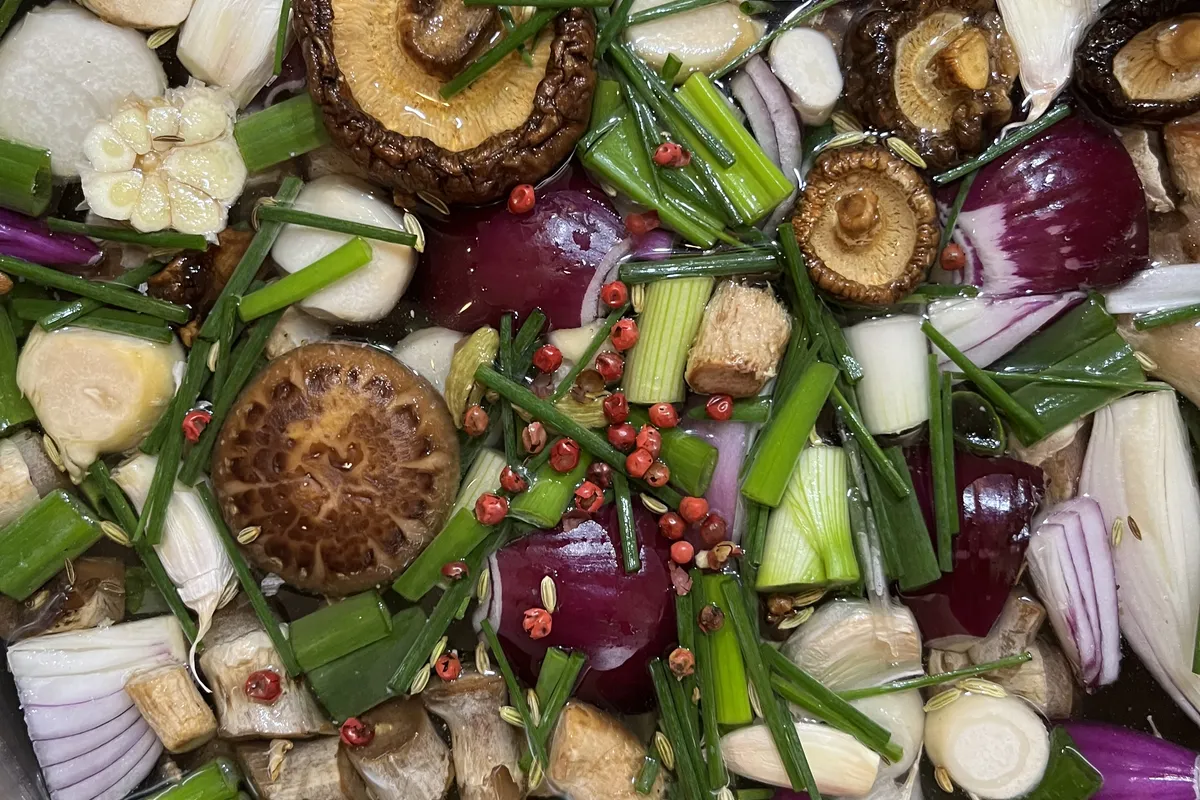
A deeply savory, aromatic homemade vegetable stock made with dried mushrooms, fresh vegetables, herbs, and whole spices. It is a versatile foundation for soups, sauces, risottos, stews, and countless other dishes.
- Aromatic
- Budget-Friendly
- Dairy-Free
- Freezer-Friendly
- Gluten-free
- Healthy
- Hearty
- Make-Ahead
- Meal-Prep
- One-Pot
- Umami
- Vegan
- Vegetarian
- Prep
- 15 min
- Cook
- 1 hr
- Total
- 1 hr 15 min
- Difficulty
- Easy
Method
0 of 9 steps done
Wash the vegetables thoroughly and remove any dirt or damaged parts. Peel the onions if desired, although clean onion skins can be retained for a deeper colour. Roughly chop the onions, carrots, celery, and leek. Lightly crush the garlic cloves.
Add the dried mushrooms directly to the pot, or soak them briefly in warm water if you prefer. If soaking, retain the soaking liquid, strain it carefully to remove any grit, and include it in the stock.
Place the vegetables, mushroom stems, dried mushrooms, and herb stems in a large stockpot. Add the black and pink peppercorns, fennel seeds, and any optional herbs or aromatics. Pour in the cold water until the ingredients are generously covered.
Bring the pot to a boil over medium-high heat, then immediately reduce the heat. Skim off any foam or floating impurities that accumulate on the surface.
Leave the pot partially covered and simmer for 60–90 minutes. The liquid should barely bubble rather than boil vigorously. Stir occasionally if necessary, but avoid breaking up the vegetables excessively.
Add the initial teaspoon of salt and taste the stock toward the end of cooking. Adjust the seasoning according to how you intend to use it. If the stock will be reduced further or used in dishes that already contain salt, keep it relatively lightly seasoned.
Remove the pot from the heat. Carefully pour the liquid through a fine-mesh strainer into a clean container. For a clearer stock, line the strainer with cheesecloth. Allow the vegetables to drain naturally without pressing them, which can introduce sediment and make the stock cloudy.
Measure the finished stock. If you want a more concentrated flavour, return it to the pot and simmer uncovered until the desired concentration is reached. If it is too strong, add a little water to taste.
If using immediately, keep the stock hot until needed. Otherwise, divide it into shallow containers and refrigerate promptly, or cool it rapidly using an ice bath before transferring it to the refrigerator or freezer.
Notes & tips
- Choosing the vegetables The ingredients above provide a balanced starting point, but vegetable stock is an excellent way to experiment with different combinations. Onions: Red, white, yellow, and spring onions all work. Yellow onions offer a balanced flavour, while red onions can add colour and a slightly sweeter character. Carrots: Add natural sweetness and body. Use them generously enough to balance the savoury ingredients without making the stock taste overly sweet. Celery: Provides a classic savoury, aromatic foundation. Celery root is an excellent substitute and gives the stock a slightly earthier flavour. Leeks: Add a mild, delicate onion flavour. Wash them particularly well, as dirt can collect between the layers. Mushrooms: Dried shiitake mushrooms are especially useful for their concentrated umami. Mixed forest mushrooms also work well. Fresh mushroom stems add further savoury depth. Garlic: Adds depth and aroma. Four cloves provide a noticeable but balanced garlic flavour. Herbs: Parsley and thyme stems are reliable choices. Rosemary can be overpowering if used in large quantities, while cilantro stems give the stock a more distinctive character. Spices: Black peppercorns provide warmth, pink peppercorns contribute a delicate fruity note, and fennel seeds add subtle sweetness. Adjust the quantities to suit your preferred flavour profile. - Vegetables to use sparingly or avoid Not every vegetable makes a good stock ingredient. Nightshades: Tomatoes, peppers, aubergines, and potatoes can shift the flavour away from a neutral vegetable stock. Small amounts of tomato can work well, but large quantities may make the stock acidic or overly distinctive. Very watery vegetables: Courgettes, cucumbers, and similar vegetables tend to contribute relatively little flavour for their volume. Starchy vegetables: Potatoes can make the stock cloudy and starchy. They are generally better omitted. Strong brassicas: Cabbage, broccoli, cauliflower, and Brussels sprouts can develop strong sulphurous flavours, especially with prolonged cooking. Beetroot: Can dominate the flavour and colour of the finished stock. - Making stock from kitchen scraps Saving vegetable trimmings is a practical way to reduce food waste. Keep a freezer bag or airtight container in the freezer and add suitable scraps as you prepare meals. Onion ends and clean skins, carrot peels, celery leaves, leek greens, parsley stems, and mushroom trimmings are all useful. A few guidelines help keep the stock consistent: Wash vegetables before storing their scraps. Freeze scraps promptly rather than keeping them at room temperature. Avoid mouldy, spoiled, or heavily soiled pieces. Use scraps in roughly balanced proportions. A bag containing mostly onion skins or strong herbs can produce an overpowering stock. Measure the accumulated scraps before cooking and supplement them with fresh vegetables if necessary. - Why a gentle simmer matters A rolling boil is unnecessary. It can break up the vegetables, emulsify impurities into the liquid, and make the finished stock cloudier. A gentle simmer provides effective extraction while helping preserve a clean flavour. Vegetable stock generally does not benefit from the same long cooking times as some meat or bone stocks. Around 60–90 minutes is a useful starting point. Longer cooking is possible, but it can make some vegetables and herbs taste bitter, muddy, or excessively vegetal. - Salt and concentration Stock is often used as an ingredient rather than served on its own, so it is best to season conservatively. If you plan to reduce the stock, add salt sparingly at first. As water evaporates, the salt concentration increases. You can always adjust the seasoning when using the stock in a finished dish. - Storage and freezing Refrigerator: Store in clean, airtight containers and use within 3–4 days. Freezer: Freeze in suitable containers or ice cube trays for convenient portions. Leave room for expansion in rigid containers. Portioning: Freeze in 250 ml portions for soups and sauces, or in smaller portions for deglazing pans and adding to recipes. Cool the stock rapidly and refrigerate or freeze it within two hours of cooking. Dividing it into shallow containers helps it cool faster. Do not leave a large pot of stock at room temperature to cool completely. Follow standard food-safety guidance for refrigeration and freezing. Important: This recipe is intended for refrigerated or frozen storage, not shelf-stable preservation. Do not store homemade vegetable stock at room temperature in sealed jars unless you use a validated pressure-canning process specifically suitable for it.
Nutrition per serving
- Calories
- 15 kcal
- Protein
- 0.7 g
- Fat
- 0.2 g
- Saturated fat
- 0 g
- Carbohydrates
- 3 g
- Sugar
- 1.5 g
- Fiber
- 0.2 g
- Salt
- 0.3 g